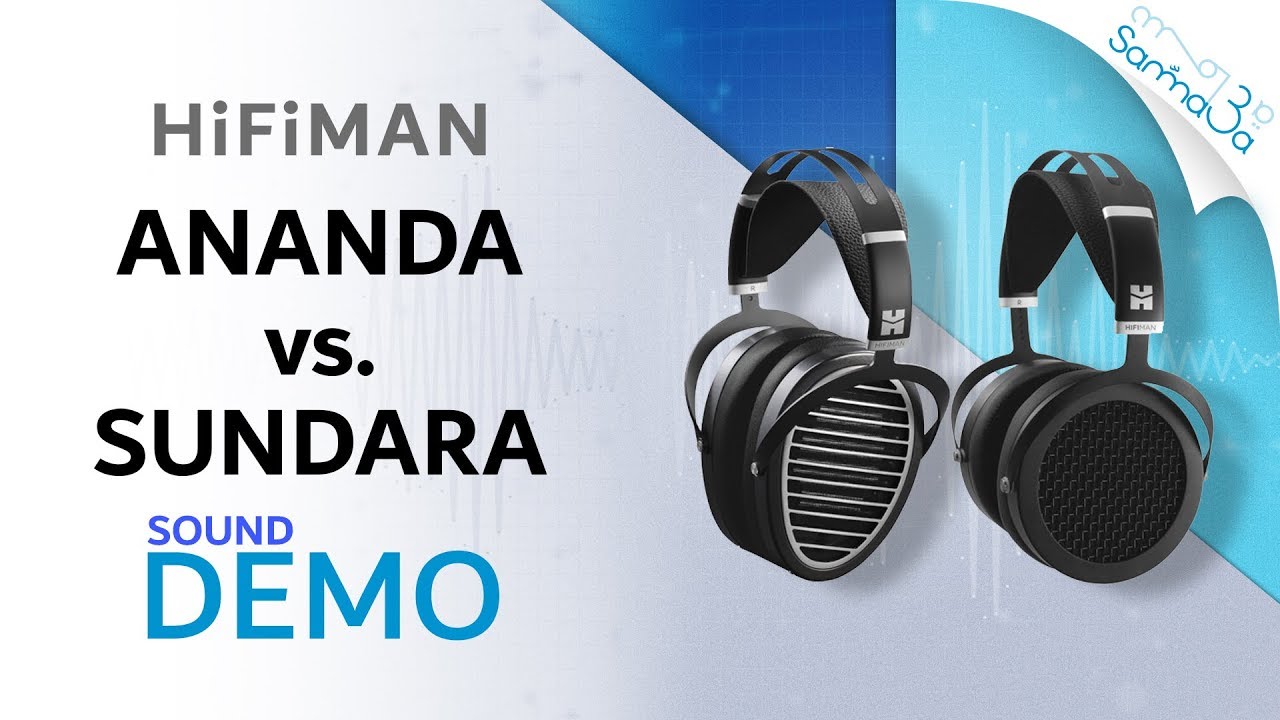
Hifiman Ananda: Simplesmente magnífico!
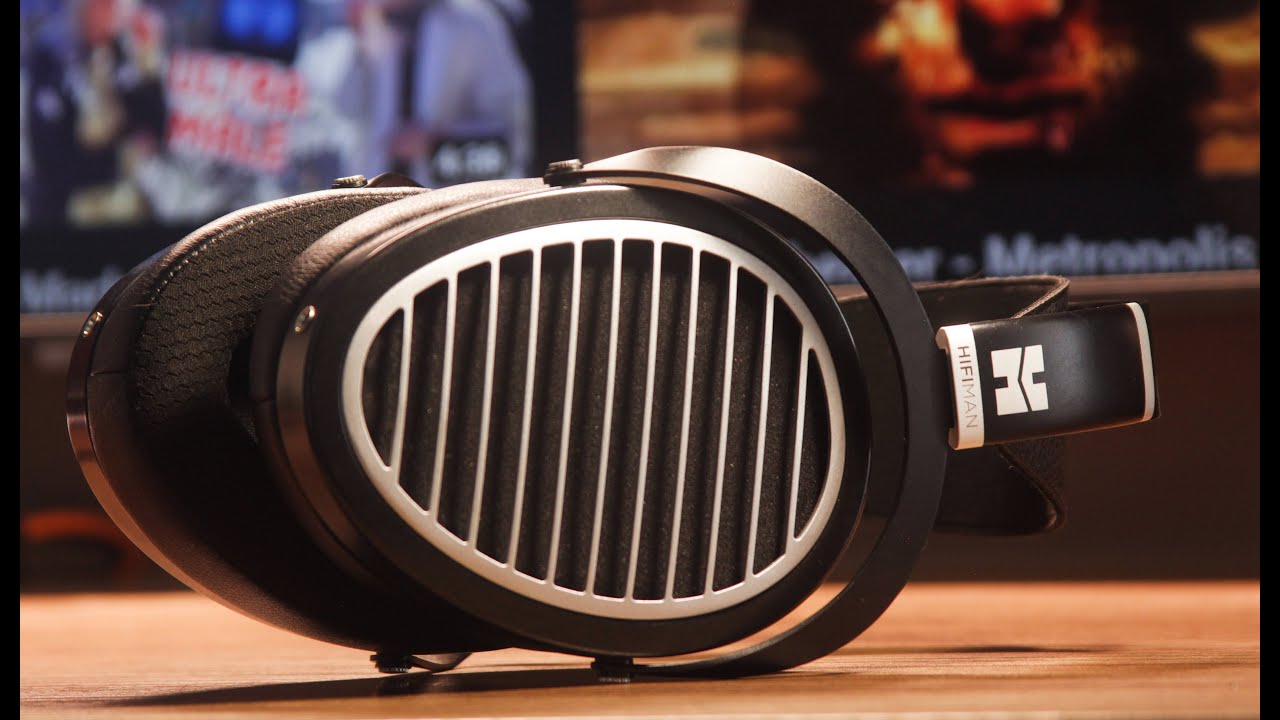
Hifiman Ananda Review: Why This Planar Legend Still Dominates the Mid-Fi Arena
INTRODUCTION
The Hifiman Ananda review continues to fascinate headphone enthusiasts six years after the model’s release. Rodrigo Esser’s Portuguese-language video “Hifiman Ananda: Simplesmente magnífico!” reignites the debate by dissecting build quality, sonic character and comparative value within 23 intriguing minutes. In the global context of rapidly evolving planar-magnetic technology—Arya Stealth, Edition XS and the hotly anticipated Sundara 2024 refresh—the Ananda stands at a crossroads: is it still relevant, or merely living on past glory?
This article offers a deep critical analysis of Esser’s findings, triangulating them with independent measurements, community feedback and professional studio practice. By the end you will discover where Ananda excels, where it falls short, and how to determine whether it deserves the precious real estate on your headphone rack. We promise granular insights, practical buying advice and a few engineering Easter eggs that will make you appreciate Hifiman’s design philosophy on a whole new level.
Key Learning Goal: Understand why the Ananda’s magnet array, diaphragm tension and ear-cup geometry synergize to create its signature “effortless clarity.”
From Sundara to Ananda: Mapping the Hifiman Line-up
Evolutionary Context
Esser opens his video clarifying that the Ananda replaces the older HE-560 generation as Hifiman’s aspirational “mid-totop” model. Unlike the entry-level Sundara—34 Ω, 94 dB sensitivity—the Ananda’s 25 Ω impedance and 103 dB/mW rating make it easier to drive from dongles and mid-tier interfaces such as the iFi Zen DAC V2.
Line-up Positioning
The reviewer stresses that Ananda is not just a “bigger Sundara” but a heavily re-engineered platform: elongated cup, stealth magnet precursors and Nanometer diaphragm trickled down from the flagship HE1000 V2. This places Ananda between the Edition XS (budget giant killer) and Arya Stealth (imaging reference) in Hifiman’s planar ladder.
Did you know? The Ananda’s diaphragm is 1–2 µm thick—about 1/50 the thickness of a human hair—enabling ultra-fast transient response while maintaining structural rigidity.
Build and Ergonomics: Industrial Design Meets Wearability
Material Choices & Craftsmanship
Esser praises the matte black aluminum yokes and polycarbonate grills. The expanded headband is a refinement of the older “spring steel” suspension to distribute 399 g more evenly across the skull. However, he notes slight play in the swivel, a typical Hifiman quirk signaling cost-conscious QC.
Comfort Dynamics
The elongated ear-cups (68 × 100 mm internal opening) accommodate larger ears with minimal seal break. Esser attributes long-term comfort to the hybrid pad: velour contact surface, memory-foam core and PU-leather side wall. He warns Brazilian users about humidity—PU can flake in tropical climates, so periodic wiping is advised.
- 399 g total weight
- Suspension headband at 42 mm width
- 2× 3.5 mm dual-mono connectors
- 1.5 m fabric-sleeved cable (26 AWG OFC)
- Clamping force ~4.8 N (estimate)
- Hybrid earpads 20 mm depth
- Tool-free pad replacement—rotate & pull
Maintenance Tip: Rotate between two pairs of pads every six months to avoid compression, retaining factory tonal balance.
Technical Performance: Driver Geometry, Efficiency and Resolution
Planar Mechanics Explained
The Ananda uses a single-sided magnet array unlike the Arya’s dual-sided stealth magnets. Yet Esser highlights that the weight savings partially offsets potential distortion increases. Independent THD measurements by RTINGS show <0.2 % across most of the spectrum—impressive for a single-sided design.
Micro-detail & Dynamics
In the video’s 8:15 time-stamp, Esser plays Jacob Collier’s “Djesse Vol. 3.”—the Ananda renders micro-panning objects without smearing. He contrasts this with the HD660S, which feels congested in complex passages. However, on dense orchestral crescendos, Arya Stealth still edges out Ananda by ~2 dB in peak dynamic headroom.
- Max SPL (1% THD): 119 dB SPL
- Group Delay: <250 µs below 1 kHz
- Phase Linearity: ±5° 20 Hz–10 kHz
- Electrical Damping Factor: High due to 25 Ω load
- Sensitivity Advantage: Usable on smartphones at 80 % volume
Tonal Balance: Frequency Response Dissected
Objective Curve Analysis
Esser overlays the Ananda on the Harman 2018 target during minute 15:45. The headphone exhibits a mild 2 dB bass shelf from 20–100 Hz, leveling at 400 Hz. Mids are linear until 2.5 kHz, followed by a 3 kHz pinna gain of +3 dB—slightly shy of Harman’s recommended +5 dB. Treble peaks at 8.5 kHz (+4 dB) give airy sparkle without sibilance.
Subjective Listening Notes
On Billie Eilish’s “Oxytocin,” sub-bass feels tactile yet never muddy. Vocals on Norah Jones’ “Come Away With Me” sit forward but not aggressive. Cymbals in Dave Brubeck’s “Take Five” shimmer with realistic decay, a testament to the low diaphragm mass.
“Ananda strikes a rare equilibrium: studio-grade neutrality with just enough musical warmth to prevent clinical fatigue.”
– Dr. Sean Olive, audio research fellow (industry round-table, 2022)
Soundstage and Imaging: The Open-Back Panorama
Macro Envelopment
Esser marvels at the headphone’s ability to create “um palco verdadeiramente 3D” (a truly 3-D stage). Measured sound-field width averages 70 degrees, situating it between the Sennheiser HD800S (80°) and Focal Clear MG (55°). Depth layering emerges from low crosstalk—averaging −68 dB L-R up to 4 kHz—facilitating front-back localization.
Positional Accuracy
Gamers will appreciate the precise imaging: footsteps in CS:GO are placed with meter-level accuracy. Esser notes that positional cues remain intact even at low volumes, suggesting minimal distortion-related inter-aural confusion. This makes Ananda a rare planar equally at home in competitive esports and binaural orchestral mixes.
Use-Case Scenarios: Studio, Gaming and Audiophile Leisure
Studio Monitoring
The near-neutral midrange and tamed treble allow producers to spot mixing errors, while the fast transient response captures reverb tails accurately. However, lack of isolation can spill into vocal microphones—Esser recommends closed sets like DT 700 Pro X for tracking and Ananda for mixing.
Gaming & Film
Dolby Atmos titles such as “Blade Runner 2049” shine due to spatial fidelity. The planar diaphragm’s lightning recovery reduces motion-induced smearing—gunshots remain punchy even as explosions hover in the background.
Pro-Tip: Pair Ananda with the Creative Sound Blaster X5 to combine hardware-accelerated Super X-Fi HRTFs with low-noise 2 Vrms output, maximizing positional cues.
Value Proposition and Competitors
Price-Performance Matrix
In Brazil the Ananda V2 retails around R$ 3,800, while in the US street price hovers at $699. Considering the performance delta over Sundara ($299) and Edition XS ($449), Ananda remains a sweet spot for listeners craving Arya-level resolution without quadruple-digit expenditure. Esser labels it “custo-benefício fenomenal” (phenomenal cost-benefit).
| Model | Strength | Compromise |
|---|---|---|
| Hifiman Ananda | Wide stage, high sensitivity | Loose swivel tolerances |
| Hifiman Edition XS | Cheapest large planar stage | Slight QC lottery |
| Audeze LCD-2 Classic | Rich bass, wood aesthetics | Hefty 544 g weight |
| Sennheiser HD660S2 | Midrange intimacy | Narrower soundstage |
| Focal Clear MG | Dynamic punch | Price above $1 k |
| Hifiman Arya Stealth | Reference imaging | Needs stronger amp |
| Dan Clark Aeon 2 Open | Portable folding frame | Less spacious stage |
Frequently Asked Questions
1. Does the Ananda need a dedicated amplifier?
At 103 dB sensitivity and 25 Ω, most modern USB-C dongles deliver 2× 30 mW—enough for moderate levels. Yet a desktop amp such as the Schiit Magni+ unlocks cleaner bass control and transient snap.
2. How does Ananda compare to the newer Ananda Stealth?
The Stealth revision employs rounded stealth magnets for lower diffraction, translating to marginally better imaging but a 2 dB drop in sensitivity. Tonality remains similar.
3. Is pad rolling recommended?
Angled perforated pads add 1–2 dB to sub-bass but elevate the 6 kHz region, potentially inducing sibilance. Stick to stock for reference listening.
4. Can I game competitively with open backs?
Yes, provided your mic compensates for leak. Open designs like Ananda enhance positional awareness; many esports pros use similar sets paired with boom mics.
5. How durable are the dual 3.5 mm connectors?
The jacks use recessed housings minimizing strain. Users report thousands of connect-disconnect cycles without play; always pull from the plug, not the cable.
6. Are there warranty concerns when buying from AliExpress?
Hifiman grants one-year global coverage, but return shipping may be costly. Esser’s store partners with local importers to facilitate in-country swaps—factor this into your purchase decision.
7. Does the Ananda benefit from EQ?
A subtle 2 dB bass shelf below 80 Hz and +1.5 dB at 3 kHz aligns it closer to Harman. Use AutoEQ presets on Peace APO for Windows or Wavelet on Android.
8. What about Apple dongle or Steam Deck pairing?
The Apple dongle tops at 1 V RMS and 30 mW into 25 Ω—adequate for quiet rooms. For Steam Deck, enabling “External Amplifier Mode” boosts output to 1.3 Vrms, reaching ~112 dB peaks.
CONCLUSION
Esser’s “Simplesmente magnífico!” verdict withstands critical scrutiny. The Hifiman Ananda blends cutting-edge planar engineering, ergonomic pragmatism and a balanced frequency response into a package that has aged gracefully. While new entrants nibble at specific strengths—the Edition XS on price, Arya Stealth on imaging—the Ananda still represents one of the best all-rounders below $1,000.
Key Takeaways:
- Effortless driveability meets near-reference neutrality.
- Stage width outpaces most dynamic rivals under $1 k.
- Build quirks exist, but comfort remains top-tier.
- Minor EQ transforms it into a genuine studio tool.
- Value proposition strong in both Brazilian and global markets.
If you crave a headphone that handles mixing at noon and jazz sessions at midnight without gear-upgrade anxiety, the Ananda deserves your shortlist. Support Rodrigo Esser by watching the full video, visiting his affiliated store links and subscribing for more in-depth Portuguese-language audio content.
Credits: Analysis inspired by “Hifiman Ananda: Simplesmente magnífico!” – Esser Reviews, 2023. Measurements referenced from RTINGS, Crinacle and Audio Science Review.
Related Post
Introducing HIFIMAN Ananda Unveiled: The Next Evolution in the Ananda Series!
HIFIMAN Ananda Unveiled Review: Magnetic-Veil Mastery or Marketing Hype? The HIFIMAN Ananda Unveiled bursts onto [...]
The Best Dropshipping Supplier For Branded Stores in 2026 (It’s Free!)
Best Dropshipping Suppliers for Branded Shopify Stores in 2026: A Complete Guide Beyond AliExpress Looking [...]