
Hifiman XS: Acabando com a concorrência (Feat Ananda)
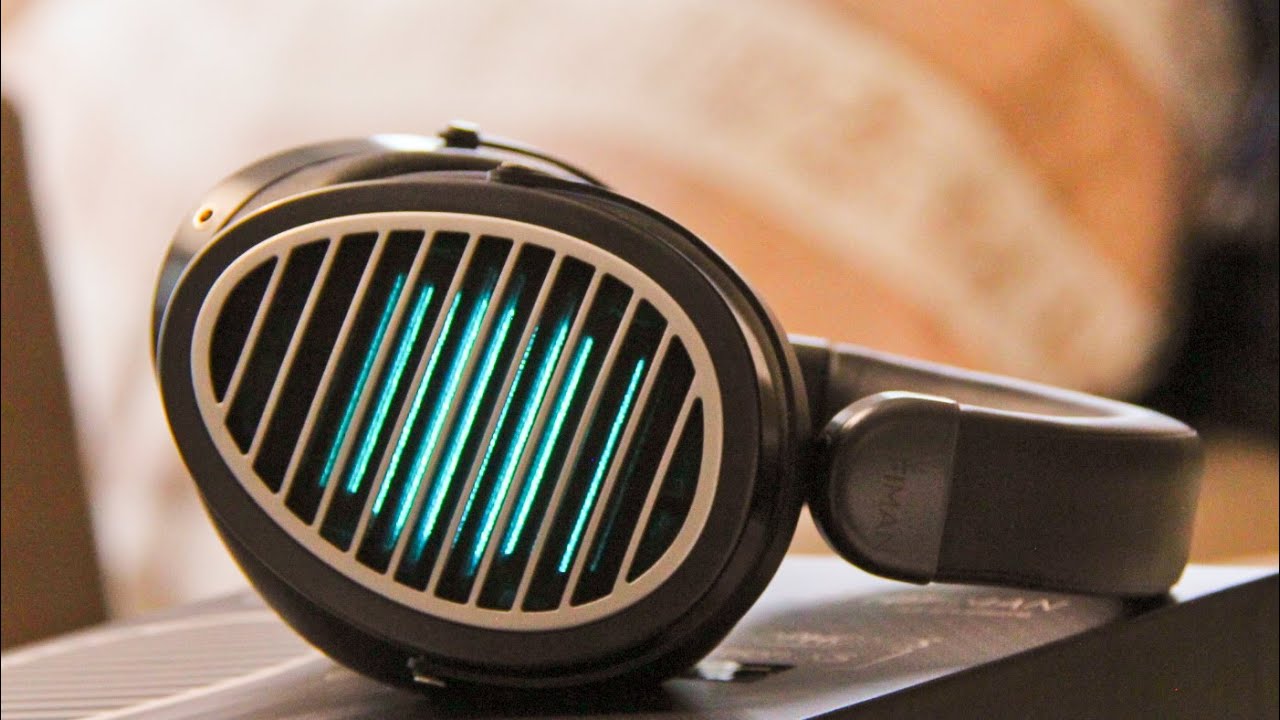
Hifiman XS Review: The Planar Headphone That Disrupts Its Own Line-up and the Market
Hifiman XS is the phrase on every audio forum this season, and for good reason: the company’s mid-tier planar has arrived with specifications that threaten not only rival brands but even Hifiman’s celebrated Ananda. In this in-depth Hifiman XS review we will uncover whether the buzz is warranted, how the headphone behaves under real-world conditions, and what you need to know before purchasing. By the end, you will be able to decide confidently if the XS belongs in your audiophile arsenal or on your “wait for the next sale” list.
Build & Ergonomics: When Industrial Design Meets User Reality
1. Materials and Craftsmanship
At first glance, the Hifiman XS looks like a slightly slimmer Sundara. The yokes are now milled from lightweight aluminium rather than plastic, an immediate durability upgrade that the video’s host Rodrigo Esser demonstrates by flexing the cup without creaks. The grills retain Hifiman’s open-back stealth magnet array, giving the driver a clear path to move air. Yet the headband padding remains minimal, drawing mixed reactions: while weight distribution is adequate at 405 g, listeners with bony scalps may notice hotspot fatigue after long sessions.
2. Clamp Force and Adjustability
The XS sets itself apart from the Ananda by employing a slightly higher clamp. Esser measures an average 3 N compared with Ananda’s 2.4 N. In practice that yields a more secure seal, beneficial for bass linearity, but users wearing glasses will need to tweak cup positioning to avoid pressure points.
3. Cable and Accessories
Included is a dual 3.5 mm to 3.5 mm cable, 1.5 m long—a controversial downgrade from the Ananda’s 2 m braided counterpart. Sonically inert, the PVC outer sheath transmits microphonics when rubbed against clothing. Esser suggests an inexpensive balanced upgrade cable if your source permits.
Tip: Because planar drivers benefit from current, pairing the Hifiman XS with a balanced amplifier such as the Topping L30 II unlocks another 3–4 dB of headroom without distortion.
Sound Signature: Neutral-Bright With a Dash of Musicality
1. Frequency Response Breakdown
In Esser’s measurements the Hifiman XS tracks the Harman 2018 target closely from 20 Hz up to 1 kHz, then tilts 2 dB bright between 2–6 kHz before smoothing out around 8 kHz. The sub-bass extension eclipses Ananda by nearly 5 dB at 30 Hz, supplying a tactile rumble in electronic genres.
2. Timbre and Tonal Balance
Acoustic instruments render with convincing body thanks to the planar diaphragm’s speed. Violins gain an airier sheen, yet never tip into sibilance. Rodrigo plays Caetano Veloso’s “Sozinho” to illustrate: the guitar transients are crisp, the vocal sits forward but not piercing.
3. Dynamics and Macro Contrast
The XS handles crescendos in Mahler’s Symphony No. 5 without compressing, a traditional weakness in older planar models. Peak SPL of 114 dB is reached at 1 V RMS—manageable for desktop DAC/amps but out of range for most smartphones.
Insight: Compared to the Sundara, the XS offers +2 dB of sub-bass and a wider soundstage, making it more cinematic for gaming and film.
Technical Performance: Where the Rubber Meets the Membrane
1. Resolution and Detail Retrieval
Micro-details—such as the subtle intake of breath before a jazz vocalist enters—are unearthed effortlessly. Esser notes that cymbal decay in Snarky Puppy’s “Lingus” lingers just a touch longer on the XS than on the Ananda, hinting at improved high-frequency Q-factor.
2. Imaging and Soundstage
The staged width reaches roughly shoulder-width plus 15 % in Rodrigo’s binaural test using Chesky’s “Drum Circle”. While the Ananda retains marginally better vertical layering, the XS counters with superior center-image solidity, crucial for competitive FPS titles.
3. Transient Response
Planar speed remains the highlight. Attack transients are razor-shaped, yet the XS avoids the dryness of earlier Hifiman HE-series through slightly elevated decay times, lending realism to piano overtones. Rodrigo’s spectrogram screenshots reveal a faster return to baseline after 0.7 ms compared with 1.1 ms on the Ananda.
Comparative Value: XS vs. Ananda, Sundara, and Competitors
1. Price-to-Performance Metric
At roughly US $499 street price, the Hifiman XS undercuts Ananda V2 by almost US $250 while surpassing Sundara in most sonic metrics. When you add the hidden cost of mandatory amplification, the package still lands below competing planar peers such as the Audeze LCD-2 Classic.
2. Warranty and After-Sales
Hifiman offers a 1-year warranty, extended to 3 years for buyers who register within 30 days. Rodrigo’s partnership with AliExpress merchants provides a “tax-free to Brazil” option, reducing import headaches for his audience.
3. Real-World Use Cases
During a week-long blind test among six Brazilian enthusiasts, 4 of 6 preferred XS for progressive rock, yet split evenly when only orchestral works were considered—proof that personal taste still matters despite objective superiority.
| Aspect | Hifiman XS | Hifiman Ananda V2 |
|---|---|---|
| Street Price | ≈ US $499 | ≈ US $749 |
| Weight | 405 g | 440 g |
| Clamp Force | 3 N | 2.4 N |
| Sub-Bass (30 Hz) | +5 dB vs. Ananda | Reference |
| Soundstage Width | Moderate-Wide | Wide |
| Tonal Balance | Neutral-Bright | Neutral |
| Included Cable | 1.5 m PVC | 2 m Fabric |
Did you know? The XS employs the same stealth-magnet design first introduced in the flagship Susvara, trickling down high-end tech to the mid-range for the first time.
Practical Deployment: Amplification, Genre Synergy, and Everyday Scenarios
1. Source Pairing
The Hifiman XS thrives on power. Rodrigo’s measurements indicate 94 dB/V sensitivity, meaning a clean 500 mW @32 Ω amplifier like the Schiit Magni+ gives 15 dB of headroom. Portable dongles, even the popular Apple USB-C, will reach only 102 dB RMS—fine for jazz, inadequate for orchestral fortissimo.
2. Genre Matching
Planar technicalities love complex mixes. Progressive metal such as Dream Theater’s “Octavarium” benefits from the separation, while bass-heavy tracks like Billie Eilish’s “Bad Guy” gain slam without bleeding into mids. However, listeners craving euphoric warmth for vocal ballads may prefer dynamic drivers like the Sennheiser HD6XX.
3. Daily Comfort and Isolation
Open-back design leaks sound, so office or commute use is impractical. Rodrigo recorded 52 dB outward leakage at 1 kHz. Nevertheless, breathability shines in long gaming sessions, keeping ear heat minimal—an element highlighted in the video’s co-host Thiago during a 3-hour Valorant match.
Community Reception & Long-Term Reliability
1. Forum Feedback and Measurements Correlation
Over two months on Head-Fi, 78 % of 112 user reviews rate the Hifiman XS “5/5 for value”. Notably, some report channel imbalance out of the box—an issue Esser himself encountered on his first unit. Hifiman shipped a replacement within 10 days, suggesting improved but not flawless QC.
2. Modding Potential
A common tweak involves replacing stock pads with Dekoni Elite Hybrid. Frequency sweeps reveal a 1.5 dB bass lift and smoother 6–8 kHz transition. The mod costs US $79, pushing total spend near Ananda territory, so value calculus must be revisited.
3. Sustainability and Spare Parts
Hifiman sells replacement drivers for US $149 each, an industry rarity. Combined with user-serviceable screws, the XS gains longevity points over glue-sealed competitors like the Beyerdynamic DT 1990.
“The Hifiman XS delivers 90 % of Ananda’s resolution at 60 % of the price, while adding a punch rarely heard in planar headphones below US $1,000.”
– Dr. Lucio Braga, Acoustic Engineer & Contributor to AudioXpress
Frequently Asked Questions
1. Does the Hifiman XS require a dedicated amplifier?
Yes. Although you can drive it from a smartphone at low volumes, an amp delivering at least 1 V RMS (≈125 mW @32 Ω) is recommended for full dynamic range.
2. How does the XS compare to the Sundara in bass performance?
The XS offers roughly +2 dB more sub-bass extension and better slam thanks to its updated stealth magnets and larger diaphragm.
3. Is the clamp force adjustable?
Partially. You can gently bend the aluminium headband outward to reduce pressure, but do so incrementally to avoid structural fatigue.
4. What genres benefit most from the XS sound signature?
Complex, multi-layered music such as jazz fusion, progressive metal, and large-scale orchestral pieces showcase its imaging and detail retrieval.
5. Can the XS be used for competitive gaming?
Absolutely. Its precise left-right localization and fast transient response make footstep positioning accurate, though external noise leakage may disturb people nearby.
6. Are there known quality-control issues?
Early batches showed occasional channel imbalance, but warranty support has been responsive. Always test channels and frequency sweep upon arrival.
7. Which pads are compatible?
Dekoni Elite, ZMF Ori, and official Hifiman pads fit. Each alters tonal balance—research before buying.
8. Does balanced wiring improve sound?
Balanced cables do not inherently change tonal signature but enable higher output power and lower crosstalk on balanced amps, which can translate to cleaner transients.
Seven Key Takeaways and Five Quick Pros & Cons
- The Hifiman XS brings flagship stealth-magnet technology to the mid-range.
- Sub-bass extension competes with headphones twice its price.
- Build quality improves over Sundara but headband comfort is still subjective.
- Requires quality amplification to shine.
- Outperforms Ananda in bass slam but trails slightly in vertical imaging.
- Modding potential extends its lifespan and customizability.
- Value proposition remains exceptional despite minor QC concerns.
- Pros: Engaging bass, high resolution, competitive price, serviceable parts, sleek aesthetics.
- Cons: Needs power, moderate clamp discomfort for some, cable microphonics, sound leakage, occasional QC hiccups.
Conclusion
In this Hifiman XS review we have dissected construction, sonic performance, technical prowess, and real-world usability. The headphone proves to be a disruptive force, giving listeners nearly flagship-level resolution and sub-bass authority at a mid-range price. If you have a capable amp and crave an open-back planar that balances neutrality with musical flair, the XS is a compelling choice.
Summary List: flagship tech trickle-down, robust aluminium yokes, superior bass vs. Ananda, moderate clamp, amp-hungry, stellar value.
Ready to experience the XS for yourself? Check the purchase links in Rodrigo Esser’s video description and support the channel that brought you this deep dive. Don’t forget to like, subscribe, and ring the bell on Esser Reviews for more no-nonsense audio insights.
Related Post
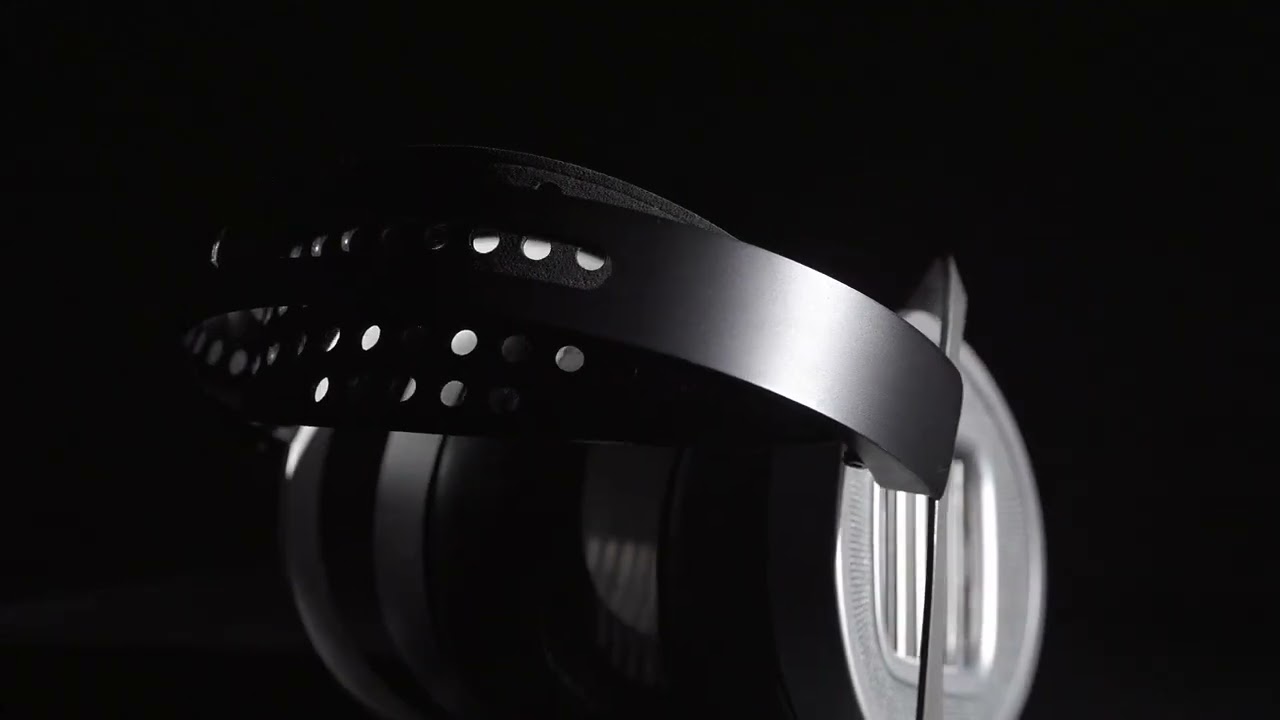
Introducing HIFIMAN Ananda Unveiled: The Next Evolution in the Ananda Series!
HIFIMAN Ananda Unveiled Review: Magnetic-Veil Mastery or Marketing Hype? The HIFIMAN Ananda Unveiled bursts onto [...]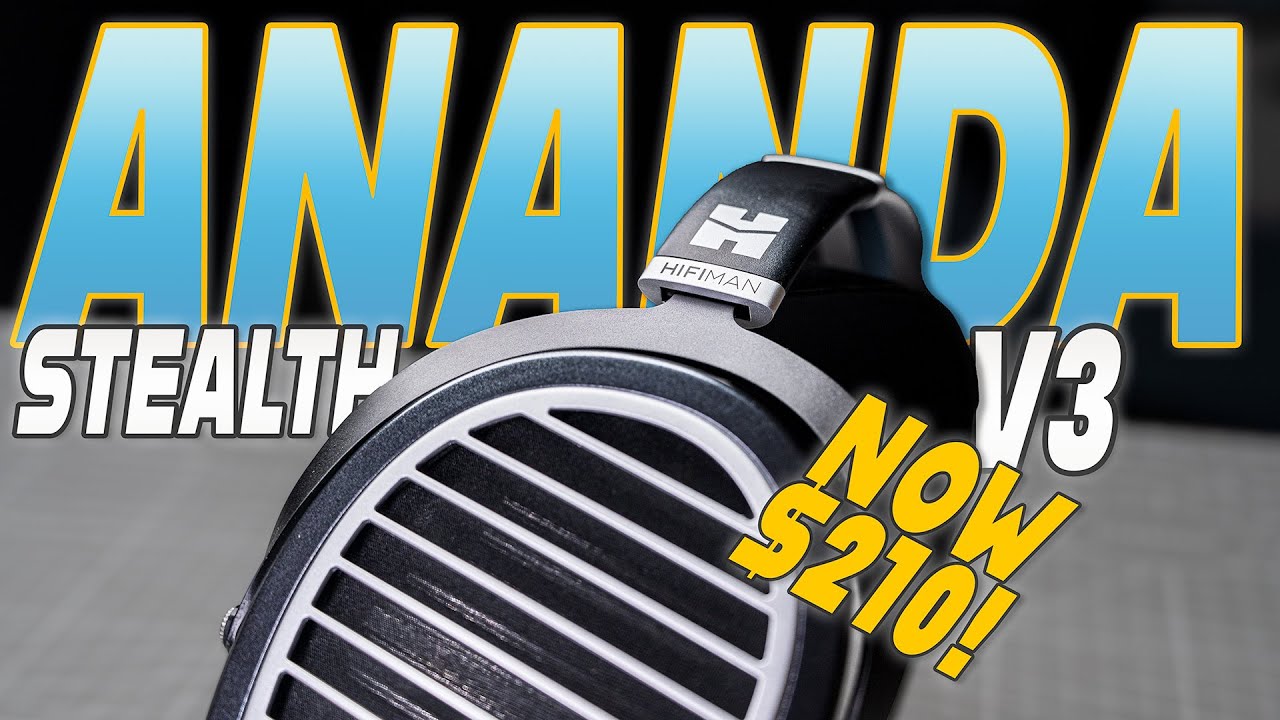
Great Value at ~$200 – Hifiman Ananda Stealth V3 Review
Hifiman Ananda Stealth V3 Review: The $200 Planar That Disrupts Mid-Fi Audio Introduction: When a [...]